






Geometry Dash Overview: Rhythm Platforming and Level Creation
Geometry Dash
One-touch controls, relentless timing, endless ways to retry.
Additional Information:
Screenshots
Editor's Review:
Updated 2026-10-22
Verdict
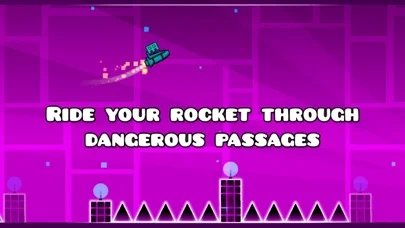
Geometry Dash is a strong choice for players who like compact controls paired with demanding timing. Its central idea is easy to understand: guide a character through dangerous passages by jumping, flying and flipping over or around spiky obstacles. The difficulty is the point. This is not presented as a gentle platformer or a story-driven adventure, but as a near-impossible challenge designed to push players toward more accurate, better-timed attempts.
The game’s appeal comes from the gap between simple input and difficult execution. One-touch gameplay makes the basic action accessible, while the level layouts create the real test. Players must learn when to react, how obstacles fit the rhythm and which sections require more careful timing. That makes Geometry Dash a natural comparison point for obstacle-focused games such as Temple Run 2 and Sonic Dash, although Geometry Dash emphasizes rhythm-based platforming rather than endless running.
A clear loop built around mastery
The documented gameplay loop is straightforward: enter a level, move through its hazards, fail when timing breaks down, and return with a better understanding of the course. Jumping, flying and gravity-flipping sections give the movement more variety than a single repeated hop. Because the challenge is concentrated in dangerous passages, progress depends on recognizing patterns and improving execution rather than on collecting resources or managing a large inventory.
That structure makes each attempt useful even when it does not reach the end. A difficult section becomes a specific problem to solve: react earlier, maintain the correct rhythm or handle a change in movement. The tradeoff is equally clear. Players who enjoy repetition and precision have a strong reason to keep trying, while anyone seeking forgiving progression may find the near-impossible design frustrating.
Rhythm gives the obstacles their identity
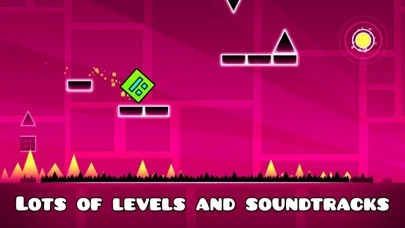
Geometry Dash is described as a rhythm-based action platformer, and its levels come with unique soundtracks. The music is therefore more than background presentation: it supports the game’s timing-focused identity. Players are encouraged to connect movement with the beat and the sequence of hazards, turning an obstacle course into a test of rhythm as well as reflexes.
This should appeal to people who enjoy music-led timing games such as Magic Tiles 3, though the interaction here is platforming rather than tapping musical notes. The soundtrack variety also helps distinguish levels from one another, giving repeated attempts a stronger sense of place even when the core controls remain simple.
Practice, customization and creation
Practice mode is included for players who want to sharpen their skills. That is an important option in a game built around difficult passages: instead of treating every failed run as the only way to improve, players have a dedicated way to work on control and timing.
The game also lets players unlock new icons and colors to customize their character. These options do not change the documented platforming mechanics, but they provide a personal visual goal alongside level completion. More substantially, the level editor allows players to build and share their own levels. This broadens the experience from learning official challenges to experimenting with obstacle layouts, musical pacing and difficulty. The editor is likely to appeal most to creative players who enjoy designing challenges as much as clearing them; that is an inference from the creation and sharing features rather than a claim about the quality of user-made content.
Who should play it—and what to consider
Geometry Dash is best suited to players who enjoy precision, repetition and gradual mastery. It can also work for newcomers to demanding platformers because the control scheme is described as simple and one-touch. However, simple controls should not be confused with easy play. The official description repeatedly frames the game as a near-impossible challenge, so its difficulty is a defining limitation for players who prefer relaxed pacing.
The store listing identifies the game as rated 4+ and classifies it under Games, Entertainment, Casual and Music. It is a paid title, so readers should check the official store for the current price before downloading. The listed iOS version requires iOS 13.0 or later. Official store links for iOS and Android appear below.
Availability and sources
Geometry Dash is listed for iOS by RobTop Games AB and for Android by RobTop Games. The publisher’s site is GeometryDash.com, linked through the developer website below. Store pricing and availability can change, so use the official listings for the latest purchase information.
Sources: Official iOS App Store listing · Publisher website · Google Play listing
Download links point to official app marketplaces such as Google Play and the App Store when available. Always review store details before installing.
FAQ
What type of game is Geometry Dash?
It is a rhythm-based action platformer with jumping, flying, flipping and obstacle-dodging challenges.
Does Geometry Dash have a level editor?
Yes. The game includes an editor for building and sharing your own levels.
Is there a practice mode?
Yes. Practice mode is included to help players sharpen their skills.
Which platforms support Geometry Dash?
The official listings included here identify Geometry Dash on iOS and Android. The iOS listing requires iOS 13.0 or later, and store availability and pricing should be checked on the official store pages.
Editor's Choice Games















Geometry Dash
One-touch controls, relentless timing, endless ways to retry.
Additional Information:
Screenshots
Editor's Review:
Updated 2026-10-22
Verdict
Geometry Dash is a strong choice for players who like compact controls paired with demanding timing. Its central idea is easy to understand: guide a character through dangerous passages by jumping, flying and flipping over or around spiky obstacles. The difficulty is the point. This is not presented as a gentle platformer or a story-driven adventure, but as a near-impossible challenge designed to push players toward more accurate, better-timed attempts.
The game’s appeal comes from the gap between simple input and difficult execution. One-touch gameplay makes the basic action accessible, while the level layouts create the real test. Players must learn when to react, how obstacles fit the rhythm and which sections require more careful timing. That makes Geometry Dash a natural comparison point for obstacle-focused games such as Temple Run 2 and Sonic Dash, although Geometry Dash emphasizes rhythm-based platforming rather than endless running.
A clear loop built around mastery
The documented gameplay loop is straightforward: enter a level, move through its hazards, fail when timing breaks down, and return with a better understanding of the course. Jumping, flying and gravity-flipping sections give the movement more variety than a single repeated hop. Because the challenge is concentrated in dangerous passages, progress depends on recognizing patterns and improving execution rather than on collecting resources or managing a large inventory.
That structure makes each attempt useful even when it does not reach the end. A difficult section becomes a specific problem to solve: react earlier, maintain the correct rhythm or handle a change in movement. The tradeoff is equally clear. Players who enjoy repetition and precision have a strong reason to keep trying, while anyone seeking forgiving progression may find the near-impossible design frustrating.
Rhythm gives the obstacles their identity
Geometry Dash is described as a rhythm-based action platformer, and its levels come with unique soundtracks. The music is therefore more than background presentation: it supports the game’s timing-focused identity. Players are encouraged to connect movement with the beat and the sequence of hazards, turning an obstacle course into a test of rhythm as well as reflexes.
This should appeal to people who enjoy music-led timing games such as Magic Tiles 3, though the interaction here is platforming rather than tapping musical notes. The soundtrack variety also helps distinguish levels from one another, giving repeated attempts a stronger sense of place even when the core controls remain simple.
Practice, customization and creation
Practice mode is included for players who want to sharpen their skills. That is an important option in a game built around difficult passages: instead of treating every failed run as the only way to improve, players have a dedicated way to work on control and timing.
The game also lets players unlock new icons and colors to customize their character. These options do not change the documented platforming mechanics, but they provide a personal visual goal alongside level completion. More substantially, the level editor allows players to build and share their own levels. This broadens the experience from learning official challenges to experimenting with obstacle layouts, musical pacing and difficulty. The editor is likely to appeal most to creative players who enjoy designing challenges as much as clearing them; that is an inference from the creation and sharing features rather than a claim about the quality of user-made content.
Who should play it—and what to consider
Geometry Dash is best suited to players who enjoy precision, repetition and gradual mastery. It can also work for newcomers to demanding platformers because the control scheme is described as simple and one-touch. However, simple controls should not be confused with easy play. The official description repeatedly frames the game as a near-impossible challenge, so its difficulty is a defining limitation for players who prefer relaxed pacing.
The store listing identifies the game as rated 4+ and classifies it under Games, Entertainment, Casual and Music. It is a paid title, so readers should check the official store for the current price before downloading. The listed iOS version requires iOS 13.0 or later. Official store links for iOS and Android appear below.
Availability and sources
Geometry Dash is listed for iOS by RobTop Games AB and for Android by RobTop Games. The publisher’s site is GeometryDash.com, linked through the developer website below. Store pricing and availability can change, so use the official listings for the latest purchase information.
Sources: Official iOS App Store listing · Publisher website · Google Play listing
Download links point to official app marketplaces such as Google Play and the App Store when available. Always review store details before installing.
FAQ
What type of game is Geometry Dash?
It is a rhythm-based action platformer with jumping, flying, flipping and obstacle-dodging challenges.
Does Geometry Dash have a level editor?
Yes. The game includes an editor for building and sharing your own levels.
Is there a practice mode?
Yes. Practice mode is included to help players sharpen their skills.
Which platforms support Geometry Dash?
The official listings included here identify Geometry Dash on iOS and Android. The iOS listing requires iOS 13.0 or later, and store availability and pricing should be checked on the official store pages.