











Poppy Playtime Chapter 1 Game Review

Poppy Playtime Chapter 1
As you solve more puzzles, the atmosphere will grow more intense.
Additional Information:
Screenshots
Editor's Review:
Updated 2026-06-16
Poppy Playtime Chapter 1 brings a compact but memorable horror adventure to mobile, asking you to step into a place that feels abandoned long before you understand why. On Android and iOS, it arrives as a paid game priced at $2.99, with a sizeable 1.4 G download that hints at a more presentation-heavy experience than a quick arcade scare. From the first moments, the game is built around the idea that you are not simply watching a haunted setting from a distance; you are walking through it, listening to it, and learning its rules one uncomfortable discovery at a time. The premise is easy to grasp even if you are new to mobile horror: you explore, you solve puzzles, and the more progress you make, the more the atmosphere tightens around you. That simple rhythm is the foundation of the chapter, and it works especially well for players who like horror games that give them things to do instead of relying only on sudden shocks. You are not just waiting for something loud to happen. You are observing rooms, interacting with the environment, and trying to stay calm while the game keeps reminding you that the place you are investigating is not as empty as it first appears.
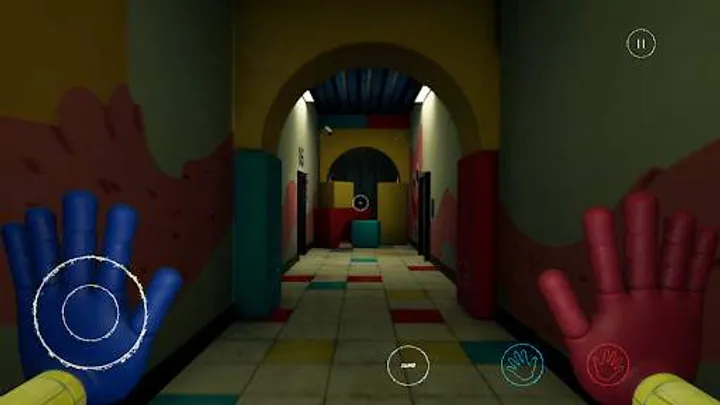
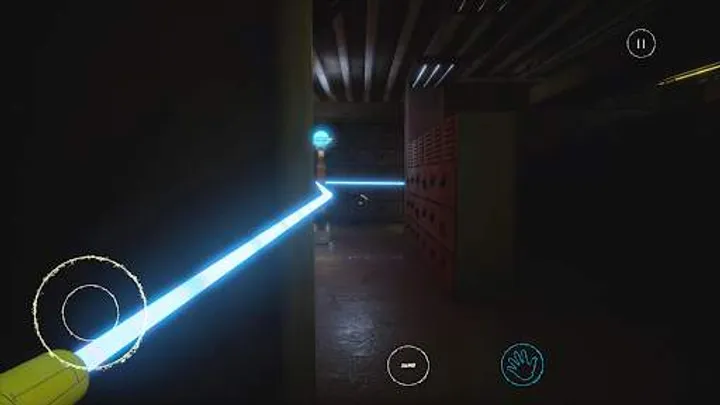
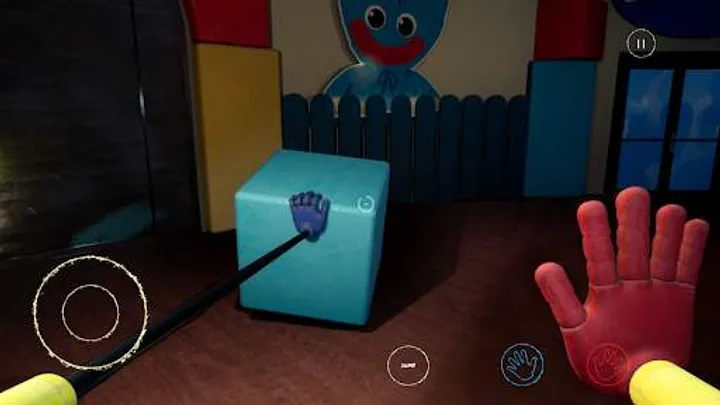
What gives Poppy Playtime Chapter 1 its appeal is the way it treats puzzle-solving as part of the tension rather than a separate break from it. Many mobile horror games push you down dark corridors and use the controls mainly for walking, running, or hiding, but this chapter is more interested in making your hands busy. You need to pay attention to what the environment is asking from you, and that means every locked route, unreachable mechanism, and strange object becomes a small challenge. Because the tagline promises that the atmosphere grows more intense as you solve more puzzles, you should expect a steady rise rather than an instant explosion of terror. The game lets you build a relationship with the setting, and then it starts using that familiarity against you. A hallway that seemed like simple scenery can feel different once you have a reason to return to it. A puzzle area can become more stressful when you sense that completion may not bring relief, but instead open the next layer of danger. This is where the chapter earns its place in the horror, survival, and adventure categories: it is about movement and discovery, but it is also about managing your nerves as each solved problem pulls you deeper in.
As a mobile experience, the game benefits from being focused. Chapter-based horror often works best when it does not overstay its welcome, and Chapter 1 is designed as an introduction that establishes mood, mechanics, and threat in a concentrated form. You should not go in expecting a sprawling open-world adventure or a long role-playing structure. This is a directed horror game, and its strongest moments come from guiding you through a sequence of spaces where each new room has a purpose. That makes it well suited for players who want a premium mobile title with a clear beginning-to-end flow rather than a free-to-play loop filled with timers, daily tasks, or upgrade clutter. The $2.99 price also sets expectations clearly: you are paying upfront to access the experience through Google Play or the App Store, with no need to treat it like a service game. Since the supplied platform details list only Android and iOS availability, this review focuses on the mobile version as a pocket-sized horror adventure. The 1.4 G size means you will want to make sure your device has room before downloading, and it also suggests that this is not a tiny minimalist project. It is the kind of game you should install when you are ready to sit down with headphones, lower the distractions, and let the mood do its work.
The practical side of playing Poppy Playtime Chapter 1 is important because horror on touchscreens can be tricky. You are relying on mobile controls to explore spaces, interact with puzzle elements, and respond when the tension rises, so patience is part of the experience. This is not the sort of game you should rush through while half-watching something else. You will get more from it if you take your time, look around carefully, and think about how each area connects to the next. The puzzle design encourages you to notice details rather than brute-force your way forward, and that suits the chapter’s overall pace. You may find yourself pausing at doorways, scanning corners, or checking whether a room has changed after you complete an objective. That uncertainty is one of the pleasures of the game. It understands that horror is not only about what appears in front of you, but also about what you expect might appear. When you are solving a puzzle, part of your mind is working through the logic, while the other part is wondering whether finishing it is going to make the situation worse. That combination gives the game a strong identity: it is playful in structure but serious in atmosphere, and it uses curiosity as bait.
Visually and tonally, Poppy Playtime Chapter 1 aims for a distinctive type of unease. The title itself suggests something childlike, but the categories make clear that this is a horror and survival adventure rather than a lighthearted toy-box outing. That contrast is a major part of why the setting can be effective. When a game blends familiar, almost innocent imagery with silence, abandonment, and the pressure of being watched, your imagination starts filling in the gaps. On a phone or tablet screen, this can become surprisingly intimate. You are holding the environment close to your face, moving through it with your own fingers, and the small scale of the device can make the experience feel personal rather than distant. The best way to approach it is to let the chapter breathe. Do not treat every dark space as a checklist item. Listen to the pacing, watch how puzzle completion changes the mood, and allow the game’s progression to build. Since this is Chapter 1, it also has the responsibility of introducing the world without explaining away all of its mystery. That can leave you with questions, but in horror, unanswered questions are often part of the hook. The goal is not just to complete the chapter; it is to finish it with the sense that you have stepped into a larger nightmare.
For players browsing mobile horror games, the biggest question is whether Poppy Playtime Chapter 1 feels worth the paid download. With a review score of 4.4 and availability on both major mobile storefronts, it has the profile of a well-known premium horror pick rather than an obscure experiment. Its value depends on what you want from the genre. If you prefer endless modes, heavy customization, or action-heavy combat, this chapter may feel too focused and puzzle-led. If you enjoy atmosphere, exploration, and a rising sense of dread tied to interactive problem-solving, it is much easier to recommend. The game is best for someone who wants a structured horror adventure that can be played as a deliberate session, not a background distraction. Its chapter format means you are getting an opening act, but it is an opening act with a clear mood and a strong gameplay identity. You are asked to think, move, and endure the feeling that progress is never completely safe. That is a very effective formula for mobile horror when it is delivered with confidence.
The verdict is that Poppy Playtime Chapter 1 is a strong mobile horror adventure for players who want something more involved than a simple jump-scare gallery. It asks for your attention, rewards observation, and uses puzzles as a way to turn curiosity into tension. The paid $2.99 price is straightforward, the Android and iOS availability makes it easy to find through Google Play and the App Store, and the 1.4 G size is reasonable for a horror game that aims to create a more developed atmosphere. You should go into it expecting an introductory chapter, not a massive standalone saga, but that focus is also part of its strength. It is polished enough in concept to feel memorable, direct enough to remain approachable, and unsettling enough to satisfy players looking for survival-adventure flavor on mobile. If you like horror games where every solved puzzle seems to invite a worse situation, Poppy Playtime Chapter 1 is absolutely worth considering.
Download links point to official app marketplaces such as Google Play and the App Store when available. Always review store details before installing.
FAQ
What is Poppy Playtime Chapter 1?
Poppy Playtime Chapter 1 is a mobile horror adventure game built around exploration, puzzle-solving, and a steadily intensifying atmosphere. As you solve more puzzles, the game becomes more tense, making progress feel both rewarding and dangerous.
What platforms is Poppy Playtime Chapter 1 available on?
Based on the supplied store information, Poppy Playtime Chapter 1 is available on Android and iOS. It is listed for Google Play and the App Store, with no supplied availability for Steam, PlayStation, Xbox, Nintendo, or an official website.
How much does Poppy Playtime Chapter 1 cost and where can I get it?
Poppy Playtime Chapter 1 is priced at $2.99. You can find it on Google Play for Android devices and on the App Store for iPhone or iPad.
What kind of gameplay should I expect?
Expect a focused horror experience with adventure and survival elements, where you explore environments and solve puzzles to move forward. The game is not described as an action-heavy title; its main appeal comes from atmosphere, tension, and interactive problem-solving.
Is Poppy Playtime Chapter 1 worth playing?
Yes, it is worth considering if you enjoy mobile horror games that use puzzles and atmosphere rather than only quick scares. With a 4.4 score, a clear premium price, and availability on both Android and iOS, it is a strong pick for players who want a compact but intense horror chapter.
Editor's Choice Games























Poppy Playtime Chapter 1
As you solve more puzzles, the atmosphere will grow more intense.
Additional Information:
Screenshots
Editor's Review:
Updated 2026-06-16
Poppy Playtime Chapter 1 brings a compact but memorable horror adventure to mobile, asking you to step into a place that feels abandoned long before you understand why. On Android and iOS, it arrives as a paid game priced at $2.99, with a sizeable 1.4 G download that hints at a more presentation-heavy experience than a quick arcade scare. From the first moments, the game is built around the idea that you are not simply watching a haunted setting from a distance; you are walking through it, listening to it, and learning its rules one uncomfortable discovery at a time. The premise is easy to grasp even if you are new to mobile horror: you explore, you solve puzzles, and the more progress you make, the more the atmosphere tightens around you. That simple rhythm is the foundation of the chapter, and it works especially well for players who like horror games that give them things to do instead of relying only on sudden shocks. You are not just waiting for something loud to happen. You are observing rooms, interacting with the environment, and trying to stay calm while the game keeps reminding you that the place you are investigating is not as empty as it first appears.
What gives Poppy Playtime Chapter 1 its appeal is the way it treats puzzle-solving as part of the tension rather than a separate break from it. Many mobile horror games push you down dark corridors and use the controls mainly for walking, running, or hiding, but this chapter is more interested in making your hands busy. You need to pay attention to what the environment is asking from you, and that means every locked route, unreachable mechanism, and strange object becomes a small challenge. Because the tagline promises that the atmosphere grows more intense as you solve more puzzles, you should expect a steady rise rather than an instant explosion of terror. The game lets you build a relationship with the setting, and then it starts using that familiarity against you. A hallway that seemed like simple scenery can feel different once you have a reason to return to it. A puzzle area can become more stressful when you sense that completion may not bring relief, but instead open the next layer of danger. This is where the chapter earns its place in the horror, survival, and adventure categories: it is about movement and discovery, but it is also about managing your nerves as each solved problem pulls you deeper in.
As a mobile experience, the game benefits from being focused. Chapter-based horror often works best when it does not overstay its welcome, and Chapter 1 is designed as an introduction that establishes mood, mechanics, and threat in a concentrated form. You should not go in expecting a sprawling open-world adventure or a long role-playing structure. This is a directed horror game, and its strongest moments come from guiding you through a sequence of spaces where each new room has a purpose. That makes it well suited for players who want a premium mobile title with a clear beginning-to-end flow rather than a free-to-play loop filled with timers, daily tasks, or upgrade clutter. The $2.99 price also sets expectations clearly: you are paying upfront to access the experience through Google Play or the App Store, with no need to treat it like a service game. Since the supplied platform details list only Android and iOS availability, this review focuses on the mobile version as a pocket-sized horror adventure. The 1.4 G size means you will want to make sure your device has room before downloading, and it also suggests that this is not a tiny minimalist project. It is the kind of game you should install when you are ready to sit down with headphones, lower the distractions, and let the mood do its work.
The practical side of playing Poppy Playtime Chapter 1 is important because horror on touchscreens can be tricky. You are relying on mobile controls to explore spaces, interact with puzzle elements, and respond when the tension rises, so patience is part of the experience. This is not the sort of game you should rush through while half-watching something else. You will get more from it if you take your time, look around carefully, and think about how each area connects to the next. The puzzle design encourages you to notice details rather than brute-force your way forward, and that suits the chapter’s overall pace. You may find yourself pausing at doorways, scanning corners, or checking whether a room has changed after you complete an objective. That uncertainty is one of the pleasures of the game. It understands that horror is not only about what appears in front of you, but also about what you expect might appear. When you are solving a puzzle, part of your mind is working through the logic, while the other part is wondering whether finishing it is going to make the situation worse. That combination gives the game a strong identity: it is playful in structure but serious in atmosphere, and it uses curiosity as bait.
Visually and tonally, Poppy Playtime Chapter 1 aims for a distinctive type of unease. The title itself suggests something childlike, but the categories make clear that this is a horror and survival adventure rather than a lighthearted toy-box outing. That contrast is a major part of why the setting can be effective. When a game blends familiar, almost innocent imagery with silence, abandonment, and the pressure of being watched, your imagination starts filling in the gaps. On a phone or tablet screen, this can become surprisingly intimate. You are holding the environment close to your face, moving through it with your own fingers, and the small scale of the device can make the experience feel personal rather than distant. The best way to approach it is to let the chapter breathe. Do not treat every dark space as a checklist item. Listen to the pacing, watch how puzzle completion changes the mood, and allow the game’s progression to build. Since this is Chapter 1, it also has the responsibility of introducing the world without explaining away all of its mystery. That can leave you with questions, but in horror, unanswered questions are often part of the hook. The goal is not just to complete the chapter; it is to finish it with the sense that you have stepped into a larger nightmare.
For players browsing mobile horror games, the biggest question is whether Poppy Playtime Chapter 1 feels worth the paid download. With a review score of 4.4 and availability on both major mobile storefronts, it has the profile of a well-known premium horror pick rather than an obscure experiment. Its value depends on what you want from the genre. If you prefer endless modes, heavy customization, or action-heavy combat, this chapter may feel too focused and puzzle-led. If you enjoy atmosphere, exploration, and a rising sense of dread tied to interactive problem-solving, it is much easier to recommend. The game is best for someone who wants a structured horror adventure that can be played as a deliberate session, not a background distraction. Its chapter format means you are getting an opening act, but it is an opening act with a clear mood and a strong gameplay identity. You are asked to think, move, and endure the feeling that progress is never completely safe. That is a very effective formula for mobile horror when it is delivered with confidence.
The verdict is that Poppy Playtime Chapter 1 is a strong mobile horror adventure for players who want something more involved than a simple jump-scare gallery. It asks for your attention, rewards observation, and uses puzzles as a way to turn curiosity into tension. The paid $2.99 price is straightforward, the Android and iOS availability makes it easy to find through Google Play and the App Store, and the 1.4 G size is reasonable for a horror game that aims to create a more developed atmosphere. You should go into it expecting an introductory chapter, not a massive standalone saga, but that focus is also part of its strength. It is polished enough in concept to feel memorable, direct enough to remain approachable, and unsettling enough to satisfy players looking for survival-adventure flavor on mobile. If you like horror games where every solved puzzle seems to invite a worse situation, Poppy Playtime Chapter 1 is absolutely worth considering.
Download links point to official app marketplaces such as Google Play and the App Store when available. Always review store details before installing.
FAQ
What is Poppy Playtime Chapter 1?
Poppy Playtime Chapter 1 is a mobile horror adventure game built around exploration, puzzle-solving, and a steadily intensifying atmosphere. As you solve more puzzles, the game becomes more tense, making progress feel both rewarding and dangerous.
What platforms is Poppy Playtime Chapter 1 available on?
Based on the supplied store information, Poppy Playtime Chapter 1 is available on Android and iOS. It is listed for Google Play and the App Store, with no supplied availability for Steam, PlayStation, Xbox, Nintendo, or an official website.
How much does Poppy Playtime Chapter 1 cost and where can I get it?
Poppy Playtime Chapter 1 is priced at $2.99. You can find it on Google Play for Android devices and on the App Store for iPhone or iPad.
What kind of gameplay should I expect?
Expect a focused horror experience with adventure and survival elements, where you explore environments and solve puzzles to move forward. The game is not described as an action-heavy title; its main appeal comes from atmosphere, tension, and interactive problem-solving.
Is Poppy Playtime Chapter 1 worth playing?
Yes, it is worth considering if you enjoy mobile horror games that use puzzles and atmosphere rather than only quick scares. With a 4.4 score, a clear premium price, and availability on both Android and iOS, it is a strong pick for players who want a compact but intense horror chapter.