





Terraria Review: Exploration, Crafting, and Sandbox Combat
Terraria
Dig deeper, build bigger, and decide how your adventure develops.
Additional Information:
Screenshots
Editor's Review:
Updated 2026-11-02
Terraria is best understood as a compact adventure sandbox with a surprisingly broad range of possible play styles. You begin by entering a generated world, then decide whether your next priority is digging for materials, improving equipment, searching for new environments, fighting stronger enemies, or turning a safe area into a settlement. That open structure is the game’s central strength: progress comes from choosing what to pursue rather than following one fixed route.
Explore, mine, and prepare
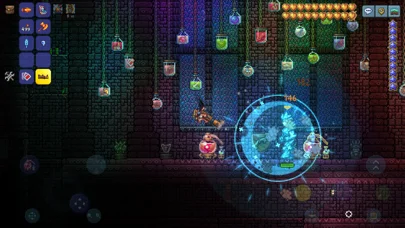
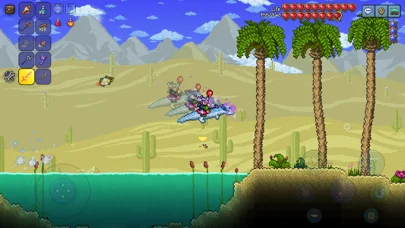
The core loop links exploration and preparation. Underground spaces provide resources and danger, while the surface leads toward distinct environments such as forests, deserts, dungeons, the Underworld, and the Corruption. The official listing names more than 20 biomes and mini-biomes, so movement through the world is also a search for new materials, enemies, and opportunities.
That creates a practical tradeoff. Digging deeper can reveal valuable items and routes, but combat threats become more significant as you leave familiar areas. Players who prefer careful preparation can spend time gathering and crafting before pushing forward; those who enjoy risk can explore sooner and learn through tougher encounters. More than 400 enemies supply a substantial range of combat challenges, with defeated foes providing loot.
Crafting and building with a purpose
Terraria’s construction system is more than a decorative side activity. The game includes more than 5,000 items, updated crafting options, and more than 20 NPCs, each offering distinct benefits and styles. Building therefore supports both creativity and progression: a settlement can be designed as a personal project while also giving discovered characters a place to contribute.
The same flexibility can be a limitation for newcomers. A catalogue of this size offers plenty to discover, but it also means that the game does not reduce every decision to a simple upgrade path. Players who enjoy experimentation, collecting, and gradually understanding how systems connect are likely to get more from it than players looking for a tightly signposted campaign.
World creation and replay value
World size options include Small, Medium, and Large, matching the sizes available in the PC version according to the listing. World Seeds allow players to create particular configurations, while the game also includes hidden easter egg worlds and a random world-name generator. A new Skyblock world seed and a menu for mixing special seeds add further ways to shape a starting world.
These tools make a difference to replayability because the setting is not just a backdrop. The choice of world size affects how much territory there is to search, while seeds let players approach world creation with a specific idea in mind. The tradeoff is time: larger worlds and a huge item pool suggest a longer commitment, especially for anyone who wants to see a broad share of the available content.
Mobile controls and multiplayer
Terraria’s mobile version includes customizable controls and a customizable user interface. It also supports Bluetooth gamepads with fully remappable buttons where supported. Those options matter because the game combines movement, combat, inventory management, building, and exploration; players can adjust the interface around the activities they use most.
Multiplayer supports up to seven friends through local Wi-Fi or online device-to-device Wi-Fi hosted games. The listing also mentions the Mobile Terraria Dedicated Server for PC, available free from Terraria.org. Cooperative play can make gathering, building, and exploration more social, although the game’s open-ended structure still leaves players to decide what their shared goals should be.
Who should play Terraria?
Terraria suits players who enjoy sandbox progression, discovery, collecting, and creative construction. It is also a natural recommendation for anyone who wants combat and exploration to feed into building rather than existing as separate modes. Its age rating is 12+.
The main limitation is not a lack of content but its scale. With many items, enemies, biomes, NPCs, seeds, and crafting possibilities, Terraria may feel overwhelming if you want a short, linear adventure. Players seeking a more immediately directed experience may prefer something like Block Craft 3D:Building or Crafting and Building, while Roblox offers a broader platform of user-created experiences.
Terraria is a paid iPhone and iPad game requiring iOS 13.0 or later. Check the official App Store listing for the current price and device details.
Sources
Editorial note: the game’s extensive systems are a major part of its appeal, but they also make Terraria better suited to patient players than to anyone wanting a quick, highly guided session.
Download links point to official app marketplaces such as Google Play and the App Store when available. Always review store details before installing.
FAQ
What is Terraria?
Terraria is a sandbox adventure game that combines exploration, combat, crafting, mining, and construction in procedurally created worlds.
How many players can join Terraria multiplayer?
The App Store listing says Terraria supports up to seven friends through local Wi-Fi or online device-to-device Wi-Fi hosted games, as well as a Mobile Terraria Dedicated Server for PC.
What can players do in Terraria?
Players can explore more than 20 biomes and mini-biomes, fight enemies, gather resources, craft items, discover NPCs, build structures, and search for loot.
Which devices support Terraria?
The official App Store listing supports iPhone and iPad with iOS 13.0 or later. It is a paid app; check the official store for the current price.
Editor's Choice Games















Terraria
Dig deeper, build bigger, and decide how your adventure develops.
Additional Information:
Screenshots
Editor's Review:
Updated 2026-11-02
Terraria is best understood as a compact adventure sandbox with a surprisingly broad range of possible play styles. You begin by entering a generated world, then decide whether your next priority is digging for materials, improving equipment, searching for new environments, fighting stronger enemies, or turning a safe area into a settlement. That open structure is the game’s central strength: progress comes from choosing what to pursue rather than following one fixed route.
Explore, mine, and prepare
The core loop links exploration and preparation. Underground spaces provide resources and danger, while the surface leads toward distinct environments such as forests, deserts, dungeons, the Underworld, and the Corruption. The official listing names more than 20 biomes and mini-biomes, so movement through the world is also a search for new materials, enemies, and opportunities.
That creates a practical tradeoff. Digging deeper can reveal valuable items and routes, but combat threats become more significant as you leave familiar areas. Players who prefer careful preparation can spend time gathering and crafting before pushing forward; those who enjoy risk can explore sooner and learn through tougher encounters. More than 400 enemies supply a substantial range of combat challenges, with defeated foes providing loot.
Crafting and building with a purpose
Terraria’s construction system is more than a decorative side activity. The game includes more than 5,000 items, updated crafting options, and more than 20 NPCs, each offering distinct benefits and styles. Building therefore supports both creativity and progression: a settlement can be designed as a personal project while also giving discovered characters a place to contribute.
The same flexibility can be a limitation for newcomers. A catalogue of this size offers plenty to discover, but it also means that the game does not reduce every decision to a simple upgrade path. Players who enjoy experimentation, collecting, and gradually understanding how systems connect are likely to get more from it than players looking for a tightly signposted campaign.
World creation and replay value
World size options include Small, Medium, and Large, matching the sizes available in the PC version according to the listing. World Seeds allow players to create particular configurations, while the game also includes hidden easter egg worlds and a random world-name generator. A new Skyblock world seed and a menu for mixing special seeds add further ways to shape a starting world.
These tools make a difference to replayability because the setting is not just a backdrop. The choice of world size affects how much territory there is to search, while seeds let players approach world creation with a specific idea in mind. The tradeoff is time: larger worlds and a huge item pool suggest a longer commitment, especially for anyone who wants to see a broad share of the available content.
Mobile controls and multiplayer
Terraria’s mobile version includes customizable controls and a customizable user interface. It also supports Bluetooth gamepads with fully remappable buttons where supported. Those options matter because the game combines movement, combat, inventory management, building, and exploration; players can adjust the interface around the activities they use most.
Multiplayer supports up to seven friends through local Wi-Fi or online device-to-device Wi-Fi hosted games. The listing also mentions the Mobile Terraria Dedicated Server for PC, available free from Terraria.org. Cooperative play can make gathering, building, and exploration more social, although the game’s open-ended structure still leaves players to decide what their shared goals should be.
Who should play Terraria?
Terraria suits players who enjoy sandbox progression, discovery, collecting, and creative construction. It is also a natural recommendation for anyone who wants combat and exploration to feed into building rather than existing as separate modes. Its age rating is 12+.
The main limitation is not a lack of content but its scale. With many items, enemies, biomes, NPCs, seeds, and crafting possibilities, Terraria may feel overwhelming if you want a short, linear adventure. Players seeking a more immediately directed experience may prefer something like Block Craft 3D:Building or Crafting and Building, while Roblox offers a broader platform of user-created experiences.
Terraria is a paid iPhone and iPad game requiring iOS 13.0 or later. Check the official App Store listing for the current price and device details.
Sources
Editorial note: the game’s extensive systems are a major part of its appeal, but they also make Terraria better suited to patient players than to anyone wanting a quick, highly guided session.
Download links point to official app marketplaces such as Google Play and the App Store when available. Always review store details before installing.
FAQ
What is Terraria?
Terraria is a sandbox adventure game that combines exploration, combat, crafting, mining, and construction in procedurally created worlds.
How many players can join Terraria multiplayer?
The App Store listing says Terraria supports up to seven friends through local Wi-Fi or online device-to-device Wi-Fi hosted games, as well as a Mobile Terraria Dedicated Server for PC.
What can players do in Terraria?
Players can explore more than 20 biomes and mini-biomes, fight enemies, gather resources, craft items, discover NPCs, build structures, and search for loot.
Which devices support Terraria?
The official App Store listing supports iPhone and iPad with iOS 13.0 or later. It is a paid app; check the official store for the current price.