











Cut the Rope Game Review

Additional Information:
Screenshots

Editor's Review:
Updated 2026-06-16
Cut the Rope is one of those mobile puzzle games that understands the small-screen promise perfectly: you open it for a quick try, solve one tidy challenge, and then somehow find yourself chasing the next solution with a grin. Released on March 27, 2012 and available for Android and iOS, it sits comfortably in the strategy, puzzle, and arcade space, mixing careful planning with immediate touch-screen action. The premise is easy to grasp from the moment you begin interacting with the levels: you are not managing armies, building cities, or memorizing complicated systems, but you are absolutely being asked to think. Each stage presents a compact problem built around ropes, timing, motion, and the satisfying goal of making the right cut at the right moment. That simplicity is the doorway, not the whole room. The more you play, the more the game reveals how much can happen inside a small puzzle box when every swipe matters. It is free to play, comes in at 342.9 MB, and feels built for the kind of player who wants something light enough for a bus ride yet clever enough to keep returning to between bigger games. With a score of 4.5, it earns that familiar mobile portal recommendation: easy to start, surprisingly hard to stop, and charming in the way it keeps asking you to do just one more level.
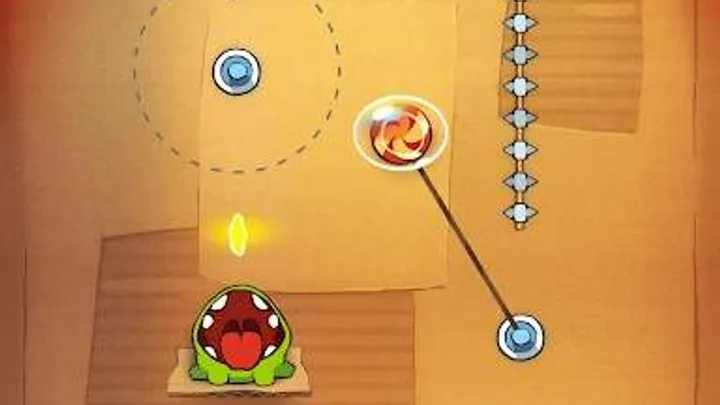
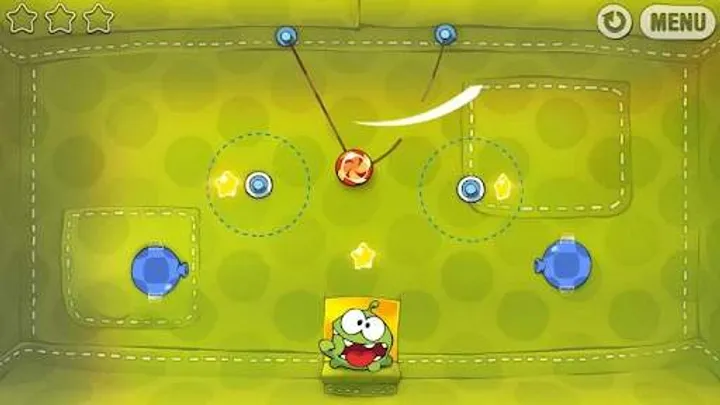
What makes Cut the Rope immediately appealing is how naturally it uses the phone or tablet as a play surface. You are not fighting a virtual controller or trying to translate console habits onto glass; you are directly touching the puzzle. A rope is there, and you cut it. Something swings, drops, or changes direction, and you learn from the result. That directness gives the game a clean arcade rhythm while still keeping the brainy feel of a strategy puzzle. You look at the layout, decide which rope should go first, judge whether timing matters, and then commit. When you succeed, it feels earned because the solution comes from observing the level and acting with intent. When you fail, it usually feels like useful information rather than punishment. You may have cut too early, misunderstood the path, or ignored the way momentum would carry the object after the rope was gone. The game’s best moments come from that little pause before action, when you can almost see the solution in your mind but still need your hand to execute it with the right touch.
The title’s strategy element is not about long menus or slow management; it is about prediction. You are constantly asking yourself what will happen after the next cut. Will the object fall straight down, swing across, drift into the target path, or miss because your timing was off by half a second? This is where Cut the Rope becomes more than a casual distraction. Each level is small enough to invite experimentation, but the game quietly trains you to plan ahead. A reckless player can still enjoy the early flow, but the real pleasure comes when you stop swiping randomly and begin reading each setup as a machine. The ropes create stored motion, the layout suggests possible routes, and your cuts become commands issued in sequence. Because the game uses short stages, you can retry without feeling bogged down. That is essential to its appeal. A failed attempt is over quickly, the reset is fast, and the next try begins with a slightly sharper understanding. The way the game motivates you to keep going is magical not because it overwhelms you with spectacle, but because every near miss seems to whisper that the answer is close.
As a mobile experience, Cut the Rope is especially strong because it respects both short and longer sessions. If you only have a minute, you can play a stage or two and feel like you accomplished something. If you have more time, the compact puzzle structure makes it easy to fall into a longer chain of attempts, successes, and small improvements. The free price helps make it approachable, and its availability on both Google Play and the App Store means most Android and iOS players can reach it through the standard places they already use. The 342.9 MB size is worth noting for players managing storage, but it is not a sprawling download by modern standards. In practical terms, you should expect a game that gets to the point quickly. It is not asking you to study a manual before having fun, and it is not trying to become a full-scale adventure with layers of story or world travel. Its strength is focus. You enter a level, understand the objective, interact with the puzzle pieces, and try to produce the satisfying result. That loop is clean, and that cleanliness is a big reason the game remains so friendly to mobile play.
The arcade side of Cut the Rope shows up in its sense of timing and repetition. You will often know the general solution before you successfully perform it, and that gap between knowing and doing becomes the challenge. A rope may need to be cut during a swing rather than at rest. Another move may depend on letting motion develop for just long enough before interrupting it. This gives the game a lively physical feel, even though the presentation is still built around puzzle logic. You are solving with your eyes, then confirming with your finger. That blend makes it inviting for many types of players. If you like strategy games but do not want a heavy commitment, you get planning in miniature. If you like arcade games but want more thought than reflex alone, you get action that is guided by reasoning. If you enjoy puzzles, you get a steady supply of bite-sized problems that are easy to reset and reconsider. The game does not need to be complicated to be absorbing; instead, it uses understandable pieces and lets their interactions create the challenge. That is the mark of a well-made mobile puzzle design.
The difficulty curve is best approached with patience rather than brute force. Early stages teach the language of the game, and once you understand that language, later puzzles become a matter of reading the layout carefully. You should expect to make mistakes, sometimes obvious ones. You may cut the correct rope in the wrong order, wait too long, or rush a move because the solution looked simpler than it was. The game’s forgiving pace keeps these moments from becoming frustrating. There is no need to treat every failed attempt as a setback; it is part of how the puzzle communicates. Because the action is so immediate, you can test a theory, watch the outcome, and refine your approach almost instantly. That makes Cut the Rope a comfortable recommendation for both casual players and more determined puzzle fans. Casual players can enjoy the charm and the quick wins, while completion-minded players can dig into cleaner solutions and better execution. It is the sort of game that can live on your device for a long time because it does not demand constant attention, yet it is always ready to offer a complete little challenge when you return.
Cut the Rope is worth playing if you want a free Android or iOS puzzle game with a clear identity and a strong touch-screen feel. Its appeal is not in size, complexity, or cinematic ambition, but in the confidence of its central idea. You see ropes, you cut them, and every cut carries a consequence. That may sound simple on paper, yet the game turns it into a steady rhythm of observation, planning, action, and reward. It fits neatly into the strategy category because success depends on thinking ahead, while its puzzle and arcade traits keep every level active and accessible. The result is a mobile game that feels welcoming without becoming empty. It gives you problems that can be understood quickly but still asks you to care about timing, sequence, and movement. For a free download available through Google Play and the App Store, it offers exactly the kind of practical value mobile players look for: short sessions, satisfying interactions, and a reason to keep coming back. With its 4.5 rating, Cut the Rope stands as a polished example of how a simple touch mechanic can become an enduring puzzle habit.
Download links point to official app marketplaces such as Google Play and the App Store when available. Always review store details before installing.
FAQ
What is Cut the Rope?
Cut the Rope is a mobile strategy puzzle game with arcade-style touch interaction. You solve compact levels by cutting ropes and using timing, movement, and planning to complete each challenge.
What platforms is Cut the Rope available on?
Cut the Rope is available on Android and iOS. It is listed for Google Play and the App Store, with no Steam, PlayStation, Xbox, Nintendo, or official website availability provided in the game details.
Is Cut the Rope free, and where can I get it?
Cut the Rope is listed as Free. According to the supplied store information, it is available through Google Play for Android and the App Store for iOS.
What kind of gameplay should I expect from Cut the Rope?
Expect short puzzle stages built around cutting ropes, judging motion, and choosing the right sequence of actions. It combines strategy, puzzle-solving, and arcade timing in a format suited for quick mobile sessions.
Is Cut the Rope worth playing?
Yes, Cut the Rope is worth trying if you enjoy clever mobile puzzles that are easy to learn but still reward careful thinking. Its free price, Android and iOS availability, and strong 4.5 score make it a practical recommendation for puzzle and strategy fans.
Editor's Choice Games























Additional Information:
Screenshots
Editor's Review:
Updated 2026-06-16
Cut the Rope is one of those mobile puzzle games that understands the small-screen promise perfectly: you open it for a quick try, solve one tidy challenge, and then somehow find yourself chasing the next solution with a grin. Released on March 27, 2012 and available for Android and iOS, it sits comfortably in the strategy, puzzle, and arcade space, mixing careful planning with immediate touch-screen action. The premise is easy to grasp from the moment you begin interacting with the levels: you are not managing armies, building cities, or memorizing complicated systems, but you are absolutely being asked to think. Each stage presents a compact problem built around ropes, timing, motion, and the satisfying goal of making the right cut at the right moment. That simplicity is the doorway, not the whole room. The more you play, the more the game reveals how much can happen inside a small puzzle box when every swipe matters. It is free to play, comes in at 342.9 MB, and feels built for the kind of player who wants something light enough for a bus ride yet clever enough to keep returning to between bigger games. With a score of 4.5, it earns that familiar mobile portal recommendation: easy to start, surprisingly hard to stop, and charming in the way it keeps asking you to do just one more level.
What makes Cut the Rope immediately appealing is how naturally it uses the phone or tablet as a play surface. You are not fighting a virtual controller or trying to translate console habits onto glass; you are directly touching the puzzle. A rope is there, and you cut it. Something swings, drops, or changes direction, and you learn from the result. That directness gives the game a clean arcade rhythm while still keeping the brainy feel of a strategy puzzle. You look at the layout, decide which rope should go first, judge whether timing matters, and then commit. When you succeed, it feels earned because the solution comes from observing the level and acting with intent. When you fail, it usually feels like useful information rather than punishment. You may have cut too early, misunderstood the path, or ignored the way momentum would carry the object after the rope was gone. The game’s best moments come from that little pause before action, when you can almost see the solution in your mind but still need your hand to execute it with the right touch.
The title’s strategy element is not about long menus or slow management; it is about prediction. You are constantly asking yourself what will happen after the next cut. Will the object fall straight down, swing across, drift into the target path, or miss because your timing was off by half a second? This is where Cut the Rope becomes more than a casual distraction. Each level is small enough to invite experimentation, but the game quietly trains you to plan ahead. A reckless player can still enjoy the early flow, but the real pleasure comes when you stop swiping randomly and begin reading each setup as a machine. The ropes create stored motion, the layout suggests possible routes, and your cuts become commands issued in sequence. Because the game uses short stages, you can retry without feeling bogged down. That is essential to its appeal. A failed attempt is over quickly, the reset is fast, and the next try begins with a slightly sharper understanding. The way the game motivates you to keep going is magical not because it overwhelms you with spectacle, but because every near miss seems to whisper that the answer is close.
As a mobile experience, Cut the Rope is especially strong because it respects both short and longer sessions. If you only have a minute, you can play a stage or two and feel like you accomplished something. If you have more time, the compact puzzle structure makes it easy to fall into a longer chain of attempts, successes, and small improvements. The free price helps make it approachable, and its availability on both Google Play and the App Store means most Android and iOS players can reach it through the standard places they already use. The 342.9 MB size is worth noting for players managing storage, but it is not a sprawling download by modern standards. In practical terms, you should expect a game that gets to the point quickly. It is not asking you to study a manual before having fun, and it is not trying to become a full-scale adventure with layers of story or world travel. Its strength is focus. You enter a level, understand the objective, interact with the puzzle pieces, and try to produce the satisfying result. That loop is clean, and that cleanliness is a big reason the game remains so friendly to mobile play.
The arcade side of Cut the Rope shows up in its sense of timing and repetition. You will often know the general solution before you successfully perform it, and that gap between knowing and doing becomes the challenge. A rope may need to be cut during a swing rather than at rest. Another move may depend on letting motion develop for just long enough before interrupting it. This gives the game a lively physical feel, even though the presentation is still built around puzzle logic. You are solving with your eyes, then confirming with your finger. That blend makes it inviting for many types of players. If you like strategy games but do not want a heavy commitment, you get planning in miniature. If you like arcade games but want more thought than reflex alone, you get action that is guided by reasoning. If you enjoy puzzles, you get a steady supply of bite-sized problems that are easy to reset and reconsider. The game does not need to be complicated to be absorbing; instead, it uses understandable pieces and lets their interactions create the challenge. That is the mark of a well-made mobile puzzle design.
The difficulty curve is best approached with patience rather than brute force. Early stages teach the language of the game, and once you understand that language, later puzzles become a matter of reading the layout carefully. You should expect to make mistakes, sometimes obvious ones. You may cut the correct rope in the wrong order, wait too long, or rush a move because the solution looked simpler than it was. The game’s forgiving pace keeps these moments from becoming frustrating. There is no need to treat every failed attempt as a setback; it is part of how the puzzle communicates. Because the action is so immediate, you can test a theory, watch the outcome, and refine your approach almost instantly. That makes Cut the Rope a comfortable recommendation for both casual players and more determined puzzle fans. Casual players can enjoy the charm and the quick wins, while completion-minded players can dig into cleaner solutions and better execution. It is the sort of game that can live on your device for a long time because it does not demand constant attention, yet it is always ready to offer a complete little challenge when you return.
Cut the Rope is worth playing if you want a free Android or iOS puzzle game with a clear identity and a strong touch-screen feel. Its appeal is not in size, complexity, or cinematic ambition, but in the confidence of its central idea. You see ropes, you cut them, and every cut carries a consequence. That may sound simple on paper, yet the game turns it into a steady rhythm of observation, planning, action, and reward. It fits neatly into the strategy category because success depends on thinking ahead, while its puzzle and arcade traits keep every level active and accessible. The result is a mobile game that feels welcoming without becoming empty. It gives you problems that can be understood quickly but still asks you to care about timing, sequence, and movement. For a free download available through Google Play and the App Store, it offers exactly the kind of practical value mobile players look for: short sessions, satisfying interactions, and a reason to keep coming back. With its 4.5 rating, Cut the Rope stands as a polished example of how a simple touch mechanic can become an enduring puzzle habit.
Download links point to official app marketplaces such as Google Play and the App Store when available. Always review store details before installing.
FAQ
What is Cut the Rope?
Cut the Rope is a mobile strategy puzzle game with arcade-style touch interaction. You solve compact levels by cutting ropes and using timing, movement, and planning to complete each challenge.
What platforms is Cut the Rope available on?
Cut the Rope is available on Android and iOS. It is listed for Google Play and the App Store, with no Steam, PlayStation, Xbox, Nintendo, or official website availability provided in the game details.
Is Cut the Rope free, and where can I get it?
Cut the Rope is listed as Free. According to the supplied store information, it is available through Google Play for Android and the App Store for iOS.
What kind of gameplay should I expect from Cut the Rope?
Expect short puzzle stages built around cutting ropes, judging motion, and choosing the right sequence of actions. It combines strategy, puzzle-solving, and arcade timing in a format suited for quick mobile sessions.
Is Cut the Rope worth playing?
Yes, Cut the Rope is worth trying if you enjoy clever mobile puzzles that are easy to learn but still reward careful thinking. Its free price, Android and iOS availability, and strong 4.5 score make it a practical recommendation for puzzle and strategy fans.