






Mini Metro: A Focused Subway Planning Strategy Game

Additional Information:
Screenshots
Editor's Review:
Updated 2026-11-25
Mini Metro is a strong fit for players who like clean strategy games where small decisions gradually create large consequences. Its central idea is simple—draw subway lines between stations and keep trains running—but the growing city turns that simple task into an ongoing exercise in prioritisation. You are not laying out a decorative map; you are trying to make a transport system remain useful as demand and complexity increase.
A network-building loop with constant revision
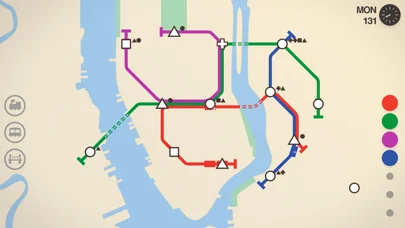
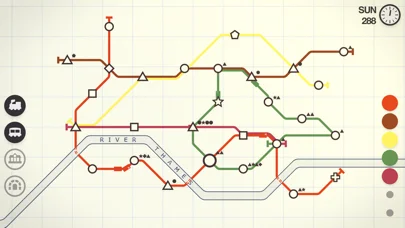
Each game begins with a city that needs a subway network. You draw lines between stations, assign trains to those routes and watch the system operate. As new stations open, the original layout has to be reconsidered. A line that was efficient earlier may become awkward once another station changes the shape of the network.
That creates Mini Metro’s main loop: observe the map, identify pressure points, redraw routes and decide which improvements matter most. The game is therefore less about finding one perfect arrangement and more about making timely adjustments. The official description confirms that city growth is random, so each game presents a different planning problem rather than a fixed sequence to memorise.
Limited resources make every improvement matter
Mini Metro asks you to decide where limited resources should go. The relevant tradeoff is not simply whether to expand, but which part of the network deserves attention first. A new route, train or other upgrade can improve one area while leaving another vulnerable, so efficient planning depends on understanding the whole map.
The game also includes a variety of upgrades that let you tailor your network. This makes adaptation more important than following a single universal blueprint.
Several ways to approach the challenge
Normal mode is designed around quick scored games, making it the clearest choice when you want a focused planning session. Endless mode removes some of that urgency in favour of a more relaxed approach, according to the official description. Extreme mode is presented as the ultimate challenge, while Creative mode lets you build the metro exactly as you want.
These modes give Mini Metro different pacing without changing its underlying identity. Players who enjoy optimisation can pursue stronger scores, while those more interested in experimenting with layouts can use Creative mode. The Daily Challenge adds a recurring competitive structure, and the listing also describes an opportunity to compete against the world each day.
Minimal presentation, useful accessibility options
Mini Metro uses a deliberately uncluttered visual concept centred on subway maps and moving trains. Its soundtrack is responsive to the metro system and was created by Disasterpeace, meaning the audio is designed to reflect the network rather than function as unrelated background music. The game also includes colorblind and night modes, practical options for changing how the map is presented.
The minimal presentation is a strength for players who enjoy readable systems and quick visual decisions. It may be less appealing if you want character-driven storytelling, elaborate environments or a conventional city-building simulation with many types of construction. Mini Metro focuses narrowly on public-transit design, and that focus is central to both its clarity and its limitation.
Who should play Mini Metro?
Choose Mini Metro if you enjoy route planning, efficiency problems and games that become more demanding through accumulation rather than combat. It should also appeal to players who like the planning side of simulation games but prefer a compact map and a clearly defined objective. Fans of broader management games may find a related interest in Township, while players seeking more overt strategy competition can compare it with Clash of Clans. For a different kind of structured problem-solving, Cut the Rope offers a puzzle-focused alternative.
Mini Metro is a paid game. The official records list it for iPhone and iPad, with an App Store minimum requirement of iOS 12.0 or later, and a verified Google Play listing for Android. Check the official store pages for current pricing and device compatibility before downloading.
Sources
Download links point to official app marketplaces such as Google Play and the App Store when available. Always review store details before installing.
FAQ
What is Mini Metro about?
Mini Metro is about designing a subway map for a growing city. You connect stations with lines and run trains through the network.
What decisions do you make in Mini Metro?
You redraw routes as new stations open and decide where to spend limited resources, while trying to keep the network efficient.
Which modes are included?
The game includes Normal, Endless, Extreme and Creative modes, as well as a Daily Challenge.
Which platforms support Mini Metro?
The official listings identify Mini Metro for iPhone and iPad, and a verified Google Play listing is available for Android. The App Store listing requires iOS 12.0 or later.
Editor's Choice Games















Additional Information:
Screenshots
Editor's Review:
Updated 2026-11-25
Mini Metro is a strong fit for players who like clean strategy games where small decisions gradually create large consequences. Its central idea is simple—draw subway lines between stations and keep trains running—but the growing city turns that simple task into an ongoing exercise in prioritisation. You are not laying out a decorative map; you are trying to make a transport system remain useful as demand and complexity increase.
A network-building loop with constant revision
Each game begins with a city that needs a subway network. You draw lines between stations, assign trains to those routes and watch the system operate. As new stations open, the original layout has to be reconsidered. A line that was efficient earlier may become awkward once another station changes the shape of the network.
That creates Mini Metro’s main loop: observe the map, identify pressure points, redraw routes and decide which improvements matter most. The game is therefore less about finding one perfect arrangement and more about making timely adjustments. The official description confirms that city growth is random, so each game presents a different planning problem rather than a fixed sequence to memorise.
Limited resources make every improvement matter
Mini Metro asks you to decide where limited resources should go. The relevant tradeoff is not simply whether to expand, but which part of the network deserves attention first. A new route, train or other upgrade can improve one area while leaving another vulnerable, so efficient planning depends on understanding the whole map.
The game also includes a variety of upgrades that let you tailor your network. This makes adaptation more important than following a single universal blueprint.
Several ways to approach the challenge
Normal mode is designed around quick scored games, making it the clearest choice when you want a focused planning session. Endless mode removes some of that urgency in favour of a more relaxed approach, according to the official description. Extreme mode is presented as the ultimate challenge, while Creative mode lets you build the metro exactly as you want.
These modes give Mini Metro different pacing without changing its underlying identity. Players who enjoy optimisation can pursue stronger scores, while those more interested in experimenting with layouts can use Creative mode. The Daily Challenge adds a recurring competitive structure, and the listing also describes an opportunity to compete against the world each day.
Minimal presentation, useful accessibility options
Mini Metro uses a deliberately uncluttered visual concept centred on subway maps and moving trains. Its soundtrack is responsive to the metro system and was created by Disasterpeace, meaning the audio is designed to reflect the network rather than function as unrelated background music. The game also includes colorblind and night modes, practical options for changing how the map is presented.
The minimal presentation is a strength for players who enjoy readable systems and quick visual decisions. It may be less appealing if you want character-driven storytelling, elaborate environments or a conventional city-building simulation with many types of construction. Mini Metro focuses narrowly on public-transit design, and that focus is central to both its clarity and its limitation.
Who should play Mini Metro?
Choose Mini Metro if you enjoy route planning, efficiency problems and games that become more demanding through accumulation rather than combat. It should also appeal to players who like the planning side of simulation games but prefer a compact map and a clearly defined objective. Fans of broader management games may find a related interest in Township, while players seeking more overt strategy competition can compare it with Clash of Clans. For a different kind of structured problem-solving, Cut the Rope offers a puzzle-focused alternative.
Mini Metro is a paid game. The official records list it for iPhone and iPad, with an App Store minimum requirement of iOS 12.0 or later, and a verified Google Play listing for Android. Check the official store pages for current pricing and device compatibility before downloading.
Sources
Download links point to official app marketplaces such as Google Play and the App Store when available. Always review store details before installing.
FAQ
What is Mini Metro about?
Mini Metro is about designing a subway map for a growing city. You connect stations with lines and run trains through the network.
What decisions do you make in Mini Metro?
You redraw routes as new stations open and decide where to spend limited resources, while trying to keep the network efficient.
Which modes are included?
The game includes Normal, Endless, Extreme and Creative modes, as well as a Daily Challenge.
Which platforms support Mini Metro?
The official listings identify Mini Metro for iPhone and iPad, and a verified Google Play listing is available for Android. The App Store listing requires iOS 12.0 or later.